Showing posts with label Documentary. Show all posts

Sunday, November 27, 2016

Film Review: De Palma (2015)


Documentaries about directors are relatively rare considering how often filmmakers like to talk about their craft, and good ones are even harder to find. That's partly because even the great directors run out of good production stories eventually - sure, Jaws and Raiders of the Lost Ark were fraught with disaster, but how many people really want to hear about the production of Always or The Terminal? But it's also because the subjects often want to present their work in a positive light, either due to nebulous concerns about their legacy, or because they are afraid that excess honesty might burn bridges and make it harder for them to work. That kind of mild self-censorship might be prudent, but it can get in the way of genuine insight.

Sunday, November 13, 2016

Film Review: Into the Inferno (2016)


Considering his reputation as our foremost chronicler of Man's place in/battle with nature - one which may be defined more by the alt comedy world's fascination with him than by his actual work - it's surprising how little Werner Herzog's presence is felt in his latest, the Netflix documentary Into the Inferno. Sure, his unmistakable Bavarian drone carries the film along, and the subject matter - the destructive/cultural power of volcanoes - is perfectly suited to his unique blend of boundless curiosity and aching pessimism, but he's an almost entirely off-screen presence, and there's little sense of his personal involvement with the project. For the most part, the focus is on volcanologist Clive Oppenheimer, who serves as presenter, expert and audience surrogate as he travels the world, investigating different active volcanoes and placing them in a global, historical context.

Saturday, September 17, 2016

Film Review: Weiner (2016)


In art and politics, timing is crucial. A gaffe or scandal at the wrong moment can sink a candidate, or be forgotten in a matter of days, depending on when it happens. Sometimes the difference between a boring documentary and a compelling one comes down to being in the right place at the right time. Both good and bad timing are in full effect in Weiner, Josh Kriegman and Elyse Steinberg's documentary about Anthony Weiner's ill-fated run for Mayor of New York in 2013, two years after he resigned from Congress amidst a sexting scandal. It was great timing for the filmmakers since production started as Weiner entered the race and was riding high in the polls, which in turn allowed them to be at the epicentre when a second sexting scandal fatally derailed his campaign. It was bad timing for the candidate, obviously, because he's not looking ahead to his re-election campaign right now.

Saturday, October 31, 2015

Film Review: The Nightmare (2015)


I'm a fairly solid sleeper. I rarely have nightmares, I don't suffer from insomnia, and it takes the sudden dislocation of jet lag or extremely unpleasant weather to mess up my sleep patterns. I don't say all of this to brag, but to establish that there is a direct causal link between watching Rodney Ascher's The Nightmare, and one of the worst night's sleep I can remember.


Thursday, October 15, 2015

Film Review: Tig (2015)


Anyone who has heard Tig Notaro's brilliant album Live (rhymes with 'give') will be familiar with what a terrible year 2012 was for the comedian. During the span of a few months, Notaro was hospitalized with the potentially deadly infection C. Diff, broke up with her long-time girlfriend, suffered the sudden and unexpected death of her mother, and was diagnosed with breast cancer. It was a bleak and terrible period in her life which led her to go onstage at Largo in Los Angeles to deliver a set which was almost instantly declared legendary, and which would fundamentally change her life.

Film Review: Junun (2015)


Music has always played an important role in the films of Paul Thomas Anderson. Boogie Nights, his second feature, wore its Scorsese/Demme influence on its sleeve by letting a meticulously assembled soundtrack both set the tone and create the tension of some of its best scenes, while music was so important to the overwhelming emotionality of Magnolia that the film had no other recourse than to stop for a moment and let its cast sing an Aimee Mann song. Anderson's collaborations with Radiohead guitarist Jonny Greenwood, who has served as the composer for all of his films since There Will Be Blood, have only deepened that connection. As the films have focused less on plot and narrative and more on character and mood, Greenwood's music has played an ever greater role in sculpting the psychology of Anderson's increasingly obtuse works.

Monday, June 01, 2015

Shot/Reverse Shot: Episode 97 - Doc/Fest 2015, Or, Matt and Ed Can’t Handle The Truth!


This week marks the start of Doc/Fest in Sheffield. Unfortunately, neither of us were able to attend this year due to other commitments, but we thought we'd talk about the state of documentary filmmaking anyway just to keep our oar in. This episode also marks the debut of a new feature on the show, wherein we end each week by recommend something film or television related that we really like, and which we feel could enrich your lives in some way.

Monday, April 06, 2015

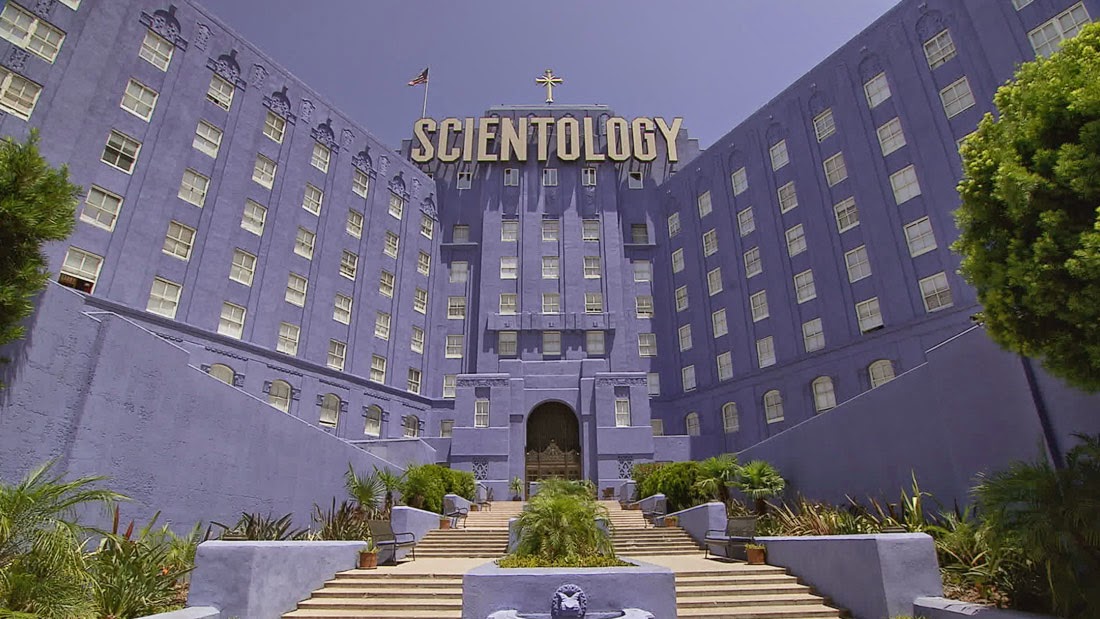
Film Review: Going Clear: Scientology and the Prison of Belief (2015)


There's a scene in We Steal Secrets, Alex Gibney's film about WikiLeaks and its founder, Julian Assange, where interviewees discuss the material leaked to WikiLeaks by Chelsea Manning. Specifically, they talk about the footage of an American helicopter attack which resulted in the death of several people, including two photographers working for Reuters. One of the interviewees points out that what was interesting about the response to the footage was that it didn't provide much truly new information. Written accounts of the attack, which happened in July 2007, had existed long before the footage was released in 2010, but seeing it take place elicited a much more visceral and emotional reaction from the world at large. Film has the power to shock, and if a picture is worth a thousands words, then film is worth 24,000 words a second.

Saturday, November 08, 2014

Film Review: The Internet's Own Boy: The Story of Aaron Swartz (2014)


In documentary filmmaking, passion and conviction can go a long way to making up for a lack of technical ability or a clear vision. This is best illustrated by something like Dear Zachary: A Letter to a Son About His Father, a film which is haphazardly assembled but still manages to make its devastating point. Brian Knappenberger's The Internet's Own Boy: The Story of Aaron Swartz also fits the bill. In covering the all too brief life of the eponymous writer, programmer and activist, from his childhood to his death in 2013, the film is impassioned and righteously angry about the events and institutions that led Swartz to take his own life, but it also lacks any focus as it pinballs from subject to subject.

Saturday, July 26, 2014

Film Review: Jodorowsky's Dune (2013)


Making a film is such a difficult, complicated process that it's a wonder most films get made at all. So many things can (and often do) go wrong at every stage of production, from last-minute changes in casting to loss of financing, that if you were to compare the number of films that were successfully made since the dawn of cinema to the number of films that weren't, the second number would be vastly larger than the first. As such, there are literally thousands of "what if" scenarios out there of films that could have existed but, for one reason or another, never came to fruition. Whether it's Orson Welles' Heart of Darkness, Francis Ford Coppola's Megalopolis, or Terry Gilliam's The Man Who Killed Don Quixote, the central appeal of these films remains the same: An unfulfilled promise that we can imagine, sometimes aided by storyboards or test footage, but will never see properly realised.

Saturday, July 05, 2014

Film Review: Life Itself (2014)


The first time I remember reading one of Roger Ebert's reviews was when I was in my first year of University in early 2005. It wasn't a review of a current release, but one of George A. Romero's Night of the Living Dead, and it made a pretty big impression on me. Mostly, this was because it featured a ton of plot details which probably would have bothered me had I not already seen the film, and did piss off a friend of mine who read the review without seeing the film first. But it also stuck with me because it was unlike any film review I'd read before. It was less a review of the film itself than of the screening Ebert attended, and of the broader culture in which the film was made. It was also unabashedly personal, and offered a pointed critique of a wrongheaded certification system which allowed young children to see acts of horrific violence purely because there was no nudity in Romero's film. It was a man speaking his mind, plainly and forcefully, and it was a mind I returned to countless times over the next decade.

Tuesday, June 17, 2014

Film Review: Beyond Clueless (2014)


Anyone familiar with critic and blogger Charlie Lyne knows that he loves teen movies. As the editor of the supremely entertaining film blog Ultra Culture, he has written extensively about how different films depict the teen experience, often with a mix of irreverence and genuine passion that is both immensely funny and deeply admirable, especially considering how little regard the genre receives from either critics or audiences. In 2012, Lyne proposed a manifesto for what he dubbed "The Teen Movie New Wave", referring to an emerging canon of teen movies and newly-minted young stars who are starting to tell entertaining and provocative stories about teenagers - ones that might actually be liked by and seem truthful to teenagers - following almost a decade in which those kind of films became increasingly rare.

Sunday, June 08, 2014

Film Review: The Unknown Known (2013)


In terms of its style and subject, The Unknown Known feels like a spiritual sequel to director Errol Morris' Oscar-winning documentary The Fog of War. Both turn Morris' deeply unnerving Interrotron onto the faces of former Secretaries of Defense who presided over long, disastrous wars (in The Fog of War, the Secretary was Robert McNamara and the war was Vietnam; in The Unknown Known, the Secretary is Donald Rumsfeld and the wars are Afghanistan and Iraq); both offer overviews of the personal lives of their subjects as well as their political careers; both supplement their near-unbroken eye contact with archive footage, occasional flashy graphics and insistent, faintly menacing music.

Monday, May 26, 2014

Film Review: Is the Man Who is Tall Happy? (2013)


There are a number of interesting questions and thought experiments posed throughout Michel Gondry's Is the Man Who is Tall Happy? in which the aggressively whimsical filmmaker recounts several conversations he had with the influential philosopher, linguist and political activist Noam Chomsky. They touch upon several interesting ideas, such as the importance of language in shaping perception and how humans understand language from an early age. They also talk at length about Chomsky's childhood during the Great Depression, and how attending a "Deweyite" progressive school shaped his intellectual development. It's a film with plenty to say, or at least it is about a man who still has plenty to say.

Saturday, January 18, 2014

You've Got To Accentuate The Positive: What's Good About The 2014 Oscar Nominations?


I'm sure I sound like a broken record saying this (actually, is that metaphor even relevant in 2014? Should it be "sound like a corrupted mp3"?) but 2013 was a very, very good year for cinema. Probably one of the best in my lifetime, and certainly the best since I started writing about film in a serious way. While it might be a bit too much to expect the Academy of Motion Pictures Arts and Sciences to comprehensively reflect the sheer volume of quality released last year - a token nomination for Upstream Color, even in Sound Design or something, would have been nice - by and large the nominations this year get a lot of things right, representing some of the better films that exist within the Academy's seemingly very narrow and conservative taste palette.

Film Review: The Square (2013)

"As long as there is a camera, the Revolution will continue."
While these words, spoken by the revolutionary Ahmed Hassan about halfway through Jehane Noujaim's The Square, would no doubt have pissed Gil Scott-Heron off, they perfectly encapsulate the ethos of the film and the movement it documents. When opponents of former Egyptian President Hosni Mubarak occupied Cairo's Tahrir Square in January of 2011 in protest over, amongst other things, Mubarak's 30 years of dictatorship, cameras were there to capture it. They were also there when Mubarak resigned, when the army took over and promised elections and a new constitution, when the elections were eventually held and were won by the Muslim Brotherhood. They also captured the ideological toing-and-froing as different groups within the anti-Mubarak movement began to turn against each other. They helped capture these moments from the perspectives of people on the ground who were fighting, both literally and figuratively, for the country's future, and allowed them to disseminate information to the world. The Revolution would have happened whether it was being televised or not, but The Square suggests that it might not have been sustained without cameras there to record every joyous, wrenching, bloody moment of it.

Tuesday, December 31, 2013

Ed's Top 20 Films of 2013

A still from Pain & Gain, a film which will not be included in this countdown.
Since 2013 is almost done, and since I've now run out of time to cram in any more films, it seems only appropriate to look back on what has been a really quite stellar 12 months and reflect on the very highest of the highlights. As I said, this year has been pretty fantastic for cinema, and it has been one of the few years where drawing up a Top 20, which sometimes seems like a bit of stretch to fill, feels somewhat inadequate. As such, I've thrown a whole heap of honorable mentions in at the end, because it would be a shame to leave out films just because they aren't as great as some of the others.

This is by no means a definitive list, since I wasn't able to see every film that I would have wanted to, but it's a good one, and it reflects the stuff that I really loved this year. Here's to a great 2013, and the hope that 2014 is anywhere near as bountiful.

Saturday, December 07, 2013

Film Review: Narco Cultura (2013)


Between 60,000 and 100,000 people have been killed in the 7 years since the Mexican government under Felipe Calderón declared war on the powerful drug cartels which have increasingly come to dominate parts of the country. It's worth stating that figure up front, if only to stress the sheer enormity of the crisis facing the country, one which goes largely unreported outside of its own borders - or even within them, as evidenced by the dozens of journalists and bloggers who have been forced to flee the country or been killed for reporting on the cartels. Even then, that number doesn't do justice to the millions of people who have been displaced by the swirling violence, or whose families have been irreparably broken by the fighting. It's these kinds of stories that Shaul Schwarz shows in Narco Cultura, his blistering and eye-opening documentary about the war on the ground that offers little hope that the war will end soon or well, but certainly captures the feeling of what it must be like to live amongst the bullets.

Thursday, November 28, 2013

Film Review: Our Nixon (2013)


Between the thousands of articles, books and films, both factual and fictionalised, that have been made about the Richard Nixon's presidency and the Watergate scandal, the subject has been so thoroughly gone over that it would take something very special to offer any new insight into that turbulent period. While Penny Lane's Our Nixon doesn't offer any startling revelations or interpretations on Nixon's actions as President, it at the very least offers a novel perspective on them. Constructed primarily from home movie footage shot by John Erlichman, H.R. Haldeman and Dwight Chapin, three of Nixon's closest aides and key figures in the Watergate cover-up, Our Nixon provides a unique glimpse into life in the Nixon White House, one that contrasts the creeping paranoia at its heart with the sunny, happy images the men captured.

Wednesday, November 27, 2013

Film Review: Leviathan (2012)


Lucien Castaing-Taylor and Verena Paravel's Leviathan achieves something very interesting; it's an abstract, impressionistic work which also manages to be a concrete depiction of reality. Set on an American fishing vessel, the film takes the cinéma vérité approach of The Maysles Brothers and Frederick Wiseman to the nth degree by not only recording the actions of the fishermen with no explanation, but placing miniature cameras on people and objects throughout the ship, capturing life on board from a myriad of intriguing angles. This approach allows the directors to not only give us a first-person perspective of what it is like to work on a trawler, giving an intimate view of what is involved in surviving hundreds of miles away from land, but also to show what life on the trawler looks like from the point of view of the captured fish. This makes for an experience which is, thanks to the amount of blood and guts on display, quite literally visceral, as well as one which at times resembles Hostel for fish.

ShareThis